Long term investors need software for a very different reason from day traders. The purpose is not normally to shave milliseconds from an order, monitor a one minute candlestick chart or react to every piece of financial news. Good long term investing software should make it easier to research assets, build a portfolio, invest regularly, monitor costs and understand whether the portfolio continues to fit the investor’s original plan.
That distinction is important because much of the trading software market is designed to encourage activity. Platforms compete on charting packages, indicators, real time alerts, social feeds and rapid order entry. Those features can be useful for active traders but may add little value to somebody intending to hold shares or funds for ten or twenty years.
A long term investor generally benefits more from clear portfolio information than from constant market information. Cost basis, dividends, asset allocation, fund expenses, company financials and long term performance are usually more useful than knowing whether a share has moved 0.4% during the previous fifteen minutes.
The software still matters. Long holding periods increase the importance of fees, portfolio administration and accurate records because small differences can accumulate over many years. The SEC’s Investor.gov material on investment fees illustrates how relatively small annual fee differences can result in considerably different portfolio values after twenty years.
Long term investment software therefore works best when it reduces unnecessary decisions rather than creates more reasons to trade.
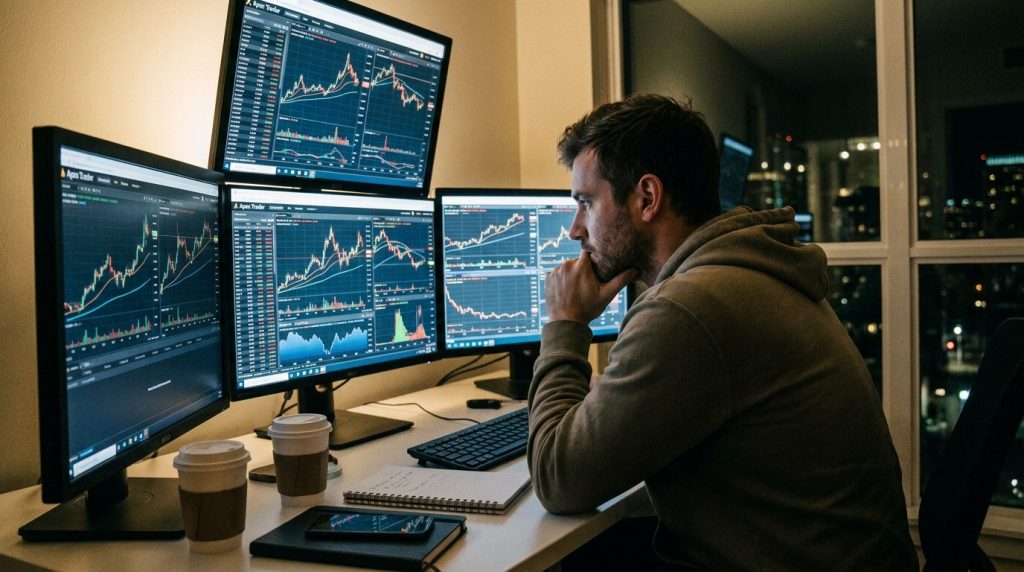
How Long Term Investment Software Differs From Trading Software
Trading software is often judged by speed. Long term investment software is better judged by organization.
A day trader needs to know what is happening now. An investor needs to understand what has happened over several years and whether that information changes the original investment case.
This changes which features deserve attention.
Real time Level 2 market data may be central to somebody trading individual stocks throughout the day. For an investor buying a diversified fund every month, paying extra for an advanced order book is unlikely to improve results.
A long term investor may instead care about whether the platform automatically records dividends, whether portfolio weights can be viewed by geography and sector, whether fees are clearly shown and whether account statements remain accessible several years later.
FINRA describes passive or buy and hold investing as an approach where investors generally make fewer trades and often use diversified funds to participate in longer term market performance rather than attempting to capture frequent short term movements. That does not mean long term investors never make changes. Portfolios still need monitoring, and investments can cease to fit the reason they were originally purchased.
The difference is the frequency and purpose of those changes.
A long term platform should therefore make inactivity comfortable. Software that constantly sends alerts about small market movements can create pressure to interfere with a portfolio that did not need attention.
This can be surprisingly important. The investor who originally planned to hold a diversified equity portfolio for fifteen years may find themselves reacting to hourly market notifications after downloading a more active trading application. Nothing about the underlying investment plan changed. The interface changed the investor’s attention.
Software should serve the strategy rather than quietly rewrite it.
Brokerage Software for Long Term Investors
For most investors, the brokerage platform is the main piece of investment software they will use.
It holds the account, accepts orders and records the portfolio. Some brokers provide only the basic functions required to buy and sell investments. Others have developed full research environments containing company data, analyst information, screeners, portfolio tools and educational resources.
Long term investors rarely need the fastest brokerage software, but reliability matters.
The platform should make it easy to see what is owned, the quantity held, the average purchase price and current market value. Cash balances and recent transactions should also be obvious rather than hidden behind several menus.
Access to the required investments comes before design. A beautiful application is of little use if the investor wants global ETFs, investment trusts or overseas shares that the broker does not offer.
Long term investors should also check whether securities are owned directly through the account structure or whether the product being offered is actually a leveraged derivative. A stock CFD and an ordinary share can reference the same company but are very different instruments. The CFD introduces leverage and financing costs, while the ordinary share represents an ownership interest in the business.
Investors comparing brokers can use resources such as Investing.co.uk to research investment platforms, shares, funds and brokers available to UK investors. Its current broker comparison section discusses platforms for both trading and longer term stock investing, while its stock section covers investment applications and access to shares.
Comparison sites are useful for narrowing down candidates, but account terms should still be confirmed directly with the broker before transferring money. Pricing, available markets and account types can change.
For a long term investor, dull features deserve more attention than flashy ones. Reliable statements, straightforward withdrawals and clear corporate action handling will probably matter more over twenty years than animated charts.
Research Software for Stocks
Investors selecting individual companies need more research than someone buying a broad index fund.
Stock research software can bring together income statements, balance sheets, cash flow statements, valuation ratios, dividend history and historical share prices. Better platforms allow investors to compare those figures across several years rather than seeing only the most recent reporting period.
The purpose is not to produce a magical score declaring that a company is a buy. It is to reduce the amount of manual work needed to understand the business.
Revenue growth can be examined beside earnings growth. Debt can be compared with cash flow. Profit margins can be tracked across several years to see whether a company’s economics are improving or deteriorating.
Screening tools can then narrow a large market into a manageable set of companies.
An investor might search for companies with positive free cash flow, moderate debt, a minimum return on equity and a valuation below a defined level. Another investor may focus on dividend growth or companies with steadily expanding revenue.
The screener is only producing candidates. It does not understand why a company’s valuation is low.
A stock can appear cheap because the market has overlooked it. It can also appear cheap because profits are about to decline sharply.
This is where direct company research remains necessary. Annual reports, regulatory filings and management commentary provide context that database ratios cannot.
Long term software should therefore make original documents easy to reach rather than replacing them completely with summaries.
Historical information is particularly useful because one good year tells the investor very little. A company that produces strong earnings only at the top of an economic cycle may look excellent in a recent snapshot and much less impressive when ten years of results are displayed.
The same applies to debt. A balance sheet can look comfortable during strong trading conditions and become problematic when revenue falls.
Long term investing is partly an exercise in asking whether a business can survive the less attractive parts of its future, not simply whether last year looked good.
Fund and ETF Research Software
Fund investors need a different type of information.
Instead of examining one company’s revenue and debt, they need to know what the fund owns, how it is managed and how much it costs.
A good ETF or fund research platform should show the underlying index or strategy, ongoing expense ratio, geographical exposure, sector allocation, largest holdings and historical performance.
Tracking difference can also matter for index funds. Two funds following the same benchmark can produce slightly different results because of costs, portfolio implementation, taxation and other operational factors.
Fund size and liquidity may be relevant, particularly with smaller ETFs. Long term investors do not normally need the same intraday liquidity as active traders, but very small funds can face closure or wider trading spreads.
Software becomes particularly useful when two products look almost identical.
An investor comparing several global equity ETFs may discover that they use different indices, have different treatment of dividends or provide different exposure to emerging markets. The fund names alone may not make those differences obvious.
FINRA’s Fund Analyzer is an example of software designed to compare fund costs and other characteristics across investment products. Investors outside the US will usually need tools designed for the funds available in their own market, but the principle is the same.
The software should make comparison easier.
It should not encourage investors to switch funds every few months because one performed slightly better recently. Constantly replacing funds according to short historical rankings is simply active trading wearing more sensible clothes.
Portfolio Tracking Software
Once investments have been purchased, portfolio tracking becomes one of the most useful functions of long term software.
A basic tracker records the value of each holding. A better one explains how the portfolio reached that value.
Deposits and investment returns should be separated. Otherwise, an account can appear to be performing extremely well simply because the investor added more money.
Dividend income should be recorded independently from capital gains, while currency movements need to be considered if the portfolio contains assets denominated in several currencies.
Performance measurement becomes particularly useful after several years.
FINRA notes that evaluating investment performance is an ongoing part of managing assets rather than something that ends after the original purchase. Investors need enough information to compare results with their objectives and appropriate benchmarks.
Choosing the benchmark matters.
An investor holding a conservative mixture of global shares and bonds should not complain that the portfolio underperformed a technology stock index during a technology boom. The portfolios contain different risks.
Likewise, comparing an investment account containing regular deposits with a headline market index can produce misleading conclusions unless cash flows are handled correctly.
Portfolio software may use money weighted or time weighted return calculations. The difference matters because money weighted performance is affected by when the investor adds and removes capital, while time weighted calculations are intended to separate investment performance from those external cash flows.
Most ordinary investors do not need to become performance measurement specialists. They should, however, know what the percentage shown on the screen actually represents.
A very precise number can still answer the wrong question.
Recurring Investments and Automation
One of the most useful software features for long term investors is also one of the least exciting: automatic investing.
A recurring investment instruction can move a fixed amount into a fund or share at regular intervals. The investor sets the amount and schedule, then allows the software to execute purchases automatically.
This approach is commonly associated with dollar cost averaging, where money is invested in regular portions regardless of short term market conditions. FINRA’s investor education material describes dollar cost averaging as investing equal amounts at regular intervals rather than attempting to choose short term market entry points.
Automation can reduce the temptation to delay investing after markets fall.
An investor manually placing every monthly purchase can find very convincing reasons to wait whenever the news looks unpleasant. Unfortunately, some of the most uncomfortable market periods can also produce lower asset prices.
Recurring instructions remove part of that decision.
Dividend reinvestment can provide another form of automation. Rather than receiving dividends as cash, eligible distributions can be used to purchase additional shares or fund units.
Over a long period, this allows investment income to become additional invested capital.
Not every broker handles fractional shares or dividend reinvestment in the same way. Some purchase whole shares and leave small cash balances behind. Others support fractions. Fees can also affect whether small recurring purchases make sense.
The automation needs to fit the account rather than being used simply because the button exists.
Investors should still review recurring instructions periodically. Income changes, financial goals change and a fund that suited the portfolio ten years ago may no longer be the best destination for every new contribution.
Automatic should mean consistent, not forgotten forever.
Asset Allocation and Diversification Tools
Long term portfolio software becomes particularly useful when it can look through individual holdings and show what the investor actually owns.
Ten funds do not necessarily create a diversified portfolio.
Several may own the same large companies. A global fund, US index fund and technology ETF can all contain substantial positions in the same group of American technology companies.
Looking only at the number of holdings can therefore create a false impression of diversification.
Asset allocation software can group investments by asset class, country, industry and sometimes individual underlying companies. This gives the investor a clearer picture of where portfolio returns and losses are likely to come from.
Investor.gov describes asset allocation as the division of a portfolio among categories such as stocks, bonds and cash, with the appropriate mixture depending partly on the investor’s time horizon and ability to tolerate risk.
Diversification then spreads exposure within and across those categories. Australia’s government backed Moneysmart service similarly describes diversification as a method of reducing the effect that poorly performing investments can have on the portfolio.
Software can also identify portfolio drift.
Suppose an investor begins with 70% shares and 30% bonds. After several strong years for equities, the allocation might become 80% shares and 20% bonds.
The investor now owns a riskier portfolio even though no conscious decision was made to increase risk.
Rebalancing restores the portfolio toward its intended allocation. Investor.gov notes that investments grow at different rates over time and that rebalancing can bring the asset mixture back toward the investor’s original allocation.
Good software can calculate the required trades or show where new contributions should be directed.
The second approach can be particularly efficient. Rather than selling an overweight asset and potentially creating taxes or fees, an investor may direct new money toward underweight parts of the portfolio.
Software handles the arithmetic.
The investor still decides what the target should be.
Dividend and Income Tracking
Income investors benefit from software that separates dividends from market price movements.
A portfolio can decline in quoted value while continuing to generate substantial income. Another portfolio may rise quickly while producing almost no cash distributions.
Neither is automatically better. They are serving different objectives.
Dividend tracking software can show payments received during the year, expected future distributions and the contribution made by each holding.
This is particularly useful for investors using portfolio income to fund living expenses.
The investor needs to know whether distributions are reasonably supported by the businesses or funds paying them. A very high dividend yield can result from a falling share price and may signal that the market expects the dividend to be reduced.
Historical dividend information provides useful context.
A company that has increased distributions for many years has behaved differently from one whose payment changes wildly with commodity prices or economic conditions. Neither structure is necessarily wrong, but the investor should know what type of income stream is being purchased.
Software can also help distinguish between income that has been received as cash and income automatically reinvested.
Without good records, reinvested dividends can disappear psychologically. The investor sees the larger share count but forgets how much of the growth came from distributions rather than price appreciation.
Investment Fees Matter More Over Long Periods
Long term investors may trade infrequently, but costs remain important.
The focus simply changes from transaction costs toward recurring fees.
A day trader may care heavily about commissions and spreads because they are paid repeatedly. A long term fund investor may care more about the annual expense ratio because the cost is charged year after year.
Investor.gov makes the point that even relatively small differences in fund fees can translate into substantial differences in final portfolio values over long periods. A higher cost investment must generate enough additional return to overcome those extra expenses.
Trading commissions still matter when regular investments are small.
Paying £5 to invest £100 means losing 5% of the contribution before the investment has done anything. The same £5 commission on a £5,000 purchase is much less important.
Some brokers now provide commission free transactions on selected assets, but investors should examine how the provider earns money elsewhere. Currency conversion fees, platform charges, fund expenses, custody costs and spreads can all matter.
Software should display these charges clearly.
Portfolio platforms that estimate total annual costs can be useful because expenses are often spread across several layers. There may be an account fee, underlying fund fee and currency conversion cost.
The cheapest platform is not necessarily the best. Service, investment selection, tax wrappers and account administration have value.
The investor simply needs to know what that value costs.
Tax Records and Account Administration
Long term investors eventually accumulate years of transactions.
This makes record keeping more important than it appears during the first purchase.
Broker software should provide downloadable statements showing purchases, sales, dividends, cash movements and charges. Investors may need these records for tax reporting, cost basis calculations or simply to verify a transaction several years later.
Tax treatment differs substantially between countries and account structures, so generic portfolio software should not be assumed to calculate every liability correctly.
UK investors, for example, may use tax advantaged wrappers alongside ordinary taxable investment accounts. An investor needs software that distinguishes between accounts rather than treating the entire portfolio as one tax position.
Corporate actions add another administrative problem.
Stock splits, mergers, spin offs and rights issues can change the number and cost basis of securities held. Good brokerage software should process these events accurately.
Long term investors encounter more of them simply because they own assets for longer.
The investor buying a company today may still own some descendant of that investment after mergers and restructurings fifteen years from now. Good historical records become valuable at precisely the point when nobody remembers what happened.
Choosing Software for Long Term Investing
The best long term investment software is usually simpler than the best trading software.
Start with market access. The platform needs to provide the funds, shares, bonds or other investments required by the portfolio.
Then consider account structure. Investors using pensions, tax advantaged accounts or joint accounts need software and a broker capable of administering them properly.
Costs come next.
Long term investors should compare account charges, fund fees, trading commissions and currency conversion costs. Small recurring costs deserve attention because compounding works on expenses as well as returns.
Portfolio reporting should then be examined.
The software should show allocation, performance and transactions clearly enough that the investor can understand the portfolio without creating a separate spreadsheet every month.
Research tools are valuable for individual stock investors but less important for somebody using one or two broad index funds. There is little point paying for advanced equity research that will never be used.
Automation can be more valuable than advanced charting.
Recurring investments, dividend reinvestment and simple rebalancing tools can help maintain a long term plan with relatively little manual work.
Ease of use also matters because long term software may remain in use for many years. An interface does not need to be exciting. It needs to remain understandable after the investor has not logged in for three months.
Mobile access is useful, but constant notifications are generally optional. A portfolio designed around a twenty year horizon does not become more informed because the investor checks it while standing in a supermarket queue.
The platform should also make leaving straightforward.
Investors should know whether assets can be transferred to another broker without selling them, what transfer charges apply and how long the process normally takes.
Long term relationships are better when they are voluntary.
Security and Long Term Account Access
Investment accounts can eventually contain a substantial portion of a person’s wealth.
Security should therefore receive more attention as the portfolio grows.
Strong individual passwords and two factor authentication should be used where available. Email accounts linked to the brokerage also need good security because password resets and account notifications may pass through them.
Investors should periodically check that contact information remains current.
This sounds trivial until an old telephone number prevents access to a two factor authentication system several years later.
Beneficiary or inheritance arrangements should also be considered where supported by the account structure and local law. A portfolio can be perfectly organised for the investor and extremely confusing for the people dealing with it after their death.
Keeping a separate record of which institutions hold investment accounts can help without storing passwords insecurely.
Long term investing creates a different type of technology risk from active trading. A day trader worries that the platform might fail for ten minutes during a volatile market.
The long term investor should also worry about whether they can still locate all the documentation ten years from now.
Long Term Investing Software Should Make Investing Less Complicated
Good software for long term investors does not need to predict the market.
It needs to record what is owned, show what it costs, make regular investing straightforward and provide enough information to determine whether the portfolio still matches its intended purpose.
Research software can help compare stocks and funds. Portfolio tracking can show diversification and performance. Automation can maintain regular contributions, while rebalancing tools prevent years of market movement from changing the portfolio’s risk profile unnoticed.
The important distinction is between useful information and activity.
Long term investors do not normally need more reasons to trade. They need better information about the investments they already own and a reliable system for adding to them over time.
The best software tends to fade into the background. The investment plan does most of the work.